Monday, April 1, 2013

THE DARK IS RISING sequence, by Susan Cooper


When the Dark comes rising, six shall turn it back;

Three from the circle, three from the track;
Wood, bronze, iron; water, fire, stone;
Five will return, and one go alone...


I just finished listening to one of my favorite stories: The Dark is Rising series, by Susan Cooper. Although I think the audio would have read better by someone with a higher voice (most of the protagonists haven't hit puberty yet), the readers (Alex Jennings, Richard Mitchley) capture the ominous, atmospheric tone perfectly and do homage to the lilting, musical Welsh.  This story features five children in a retelling of the Arthurian legend, and the battle between good and evil, in the latest century.


It's one of my favorite stories, especially of the fantasy incorporating the Arthurian mythology. Even now, almost sixteen years after first reading The Dark is Rising, the writing captivates me. I know exactly what happens next, and yet, I feel the same sense of urgency Jane, Simon, Barney, Will, and Bran feel as they fight the battle of an era, facing an ancient world of great power and magic with sometimes only faith and imagination as a shield. I love the characters and the way the old magic interacts with each of them.

A word cloud incorporating reviews from Amazon and Goodreads


Critique


It's true that there isn't a whole lot of actual action. The Dark presents a subtle danger; it works through persuasion more than violence. This criticism apparently led screenwriter John Hodge to reinterpret The Dark is Rising novel by changing Will from 11 to 13 and from English to American;  eradicating the "lyrical" tone of the books; and creating action where Will "doesn't really do very much." (Read the 2007 NPR story, All Things Considered)

I wondered if people still enjoyed these books, between the dated language and epic scale, so I scanned reviews from Amazon and Goodreads to get a feel for popular impressions. Positive Amazon reviews come from people who fondly remember reading the books as children and purchase them to share with the next generation.

More negative reviews come from folks who are expecting a comparison to Harry Potter. I see reviews that recommend The Dark is Rising series to Harry Potter fans, comparing 11-yr-old magical Harry to 11-yr-old magical Will, ignoring critical differences in writing style and tone. Destiny plays a large role in the books, and destiny isn't as popular now as it was with Middle-Ages romances. One valid critique from a 17-year-old states, "The entire story just seemed too easy. Everything worked out according to prophesy, no interesting twists or such."

Following the Old Ones through time and space can also be a bit much for us mere mortals, and I'll admit, sometimes I come back to the narrative wondering what just happened. It's intentional on the author's part. This is the 20th century Arthurian legend, complete with quests, magics, and all the destiny one can pack into it.

Notably, people who prefer the Drews and the tone of Over Sea, Under Stone tend to dislike the rest of the series, while fans of the more otherworldly Will Stanton and his novel, The Dark is Rising, are more likely to approve the whole sequence. The former is more of a simple children's quest, and has a drastically different read (perhaps because it is written long before the others).

Even with the criticisms, those who stick with the books are impressed by Susan Cooper's love for her native England and Wales, a professed homesickness that creates a rich, unique tone for the books. Story and setting are linked by the history of Arthur, and Cooper thrives on this. The "lyrical" quality Hodge deemed impossible to convey in film is the quality fans follow with devotion. I know my friends and I memorized the poems in the books!

Did you know?

A cool fact about Cooper, from an interview:

"J.R.R. Tolkien and C.S. Lewis were both teaching when I was at Oxford and without a doubt influenced the lives of all of their students. As dons, they had set the rule that the Oxford English syllabus stop at 1832 and that it be heavy on Middle English and writers like Malory and Spenser, so, as a friend of mine says, they taught us to believe in dragons." 

Recommendations

I would pair the books of Susan Cooper with C.S. Lewis, Brian Jacques, T.A. Barron, T.H. White, Edward Eager, J.R.R. Tolkien, and the wonderful Diana Wynne Jones.

Awards and Author

For those interested, the Dark is Rising books are published between 1965 and 1977, and won numerous awards, including:

The Newbery Honor for The Dark is Rising (1974)
The Newbery Medal for The Grey King (1976)
The Welsh Tir na n-Og Award for The Grey King (1975)
The Welsh Tir na n-Og Award for Silver on the Tree (1977)
National Education Association Teachers' Top 100 Books for Children for The Dark is Rising (2007)
School Library Journal Top 100 Children's Chapter Books for The Dark is Rising (2012)

Susan Cooper won the Margaret A. Edwards award in 2012, conferred by the Young Adult Library Services Association of the American Library Association. Cooper is a board member of the National Children's Book and Literacy Alliance and contributed to "The Exquisite Corpse," an exercise she recommends to young writers. Definitely go to her site, The Lost Land of Susan Cooper, and read her interviews, comments, essays, and books. I've only read one of her novels other than the sequence, The Boggart, which I remember thoroughly enjoying. I hope you fall in love with her and her writing, as I have!


Sunday, January 13, 2013

HOW TO TRAIN YOUR DRAGON, a series by Cressida Cowell


The How To Train Your Dragon series, written by Cressida Cowell, is a fantastic epic-style story for third- or fourth- graders. So, as a 26-year-old, what do I feel these books uniquely contribute to the field of children's literature?

I'll admit that I saw the movie first and loved it, and still love it after reading the books. That being said, the books hold their own; each one is a fantastic story with potent moments that catch you by surprise. Cowell's intelligent choice to open and close the books with Hiccup the elder provides thought-provoking perspective of the adventures in contrast to the two-dimensional characters. Her inclusion of hilarious dragonese, sketchy illustrations, and copious references to body fluids and anatomy make the books funny while maintaining the setting and tone of the Isle of Berk's Vikings, all larger-than-life characters.


The dragon classifications truly place the tale in a universe of its own. There is huge potential for interactivity and creative energy these books could inspire in children, and at the least, I'm willing to bet every kid who enjoys these books has a favorite species of dragon.

While these books are likely written for an audience of young boys (frequent farting, belching, snot, and poo are hints), I imagine that young girls who enjoy a good swashbuckling tale and aren't afraid of less-than-dashing characters will also enjoy these books. Lovers of the movie may be surprised to find that the first two books are populated entirely by boys, with brief references to Hiccup's mother. This takes a turn in the third book with the introduction of Camicazi--the sword fighting, pick-pocketing,  tangle-haired daughter of Bog-Burglar chief Big-Boobied Bertha, whose "bosoms have killed before and they will kill again"(208, Book 3). So, pretty much as soon as they are introduced, the women in this series are not your standard sheroes.

The series delves deeper into the women of Berk with Hiccup's mother, Valhallarama. In the closing of Book 5, Hiccup (the elder) remembers his mother as a Great Hero, a warrior, a Quester, who guarded her emotions as carefully as she hid the broken ruby she carried. Moreover, Valhallarama's description in the book pretty much defies all our current standards of beauty: "Her lovely fat, white, muscly legs! Her thunderous thighs! Her soft little beard! Her excellent sword-arm! My little double-chinned Sweetheart..."(105-106, Book 5). Like most of the men in these books, the women are larger-than-life and provide a significantly different perspective of womanhood for young girls than most females they will run across in a typical epic.

As far as their place in children's literature, these are the books that I imagine a parent giving to a child before handing them Redwall by Brian Jacques, which is what I imagine comes before/in tandem with Tolkien's The Hobbit. Cowell's style provides the perfect launching-pad: there are songs, unlikely heroes, languages, creatures and humans who are neither good nor evil, and all of whom are fallible in some way. I'm a total fan of these books, and Hiccup and his fellow characters have completely charmed me, but of course, I am not eight or ten years old, so I am not the authority on these things.

If you liked these books, I recommend:

The Enchanted Forest Chronicles: Dealing with Dragons, by Patricia C. Wrede
Percy Jackson and the Olympians: The Lightning Thief, by Rick Riordan
Voyage of the Basset, by James C. Christensen
The Sisters Grimm, by Michael Buckley

... and of course, the Redwall series and The Hobbit.


Monday, October 8, 2012

MAJOR PETTIGREW'S LAST STAND, by Helen Simonson


Major Pettigrew's Last Stand, by Helen Simonson, is an excellent first novel, but felt as though two writers were struggling to work together and bind the simplicity of the first chapters to the romantic and dramatic events of the last. I believed the characters wholeheartedly and thoroughly enjoyed their quirks, humanity, and genuine emotion--except for the events following the knitting-needle fiasco. At that point, the reader is led through a series of action scenes incongrous from the rest of the book. However, Simonson recovers her tone and her story for the epilogue.

Despite the few scenes that make you wonder if you accidentally switched the channel from As Time Goes By to a movie adaptation of Ethan Frome, the book is both charming and sad: a portrayal of life in change that at reaches a surprising and resounding poignance. There is a persistent heartache as you read about the Major's disappointed expectations, which contrasts nicely with the Major's conservatism and elitism. He isn't a character you believe to always be right--and indeed, some of the most believable passages show the Major's understanding of his own prejudices, often pointed out to him by the women he loves--but he is a character that you want to win.

Perhaps the saddest, and at the same time, the most lovely and true writing occurs when the Major has flashbacks contrasting with his present reality. It is so easy to relate to his emotions and experiences during these times; remembering fondly a time his wife told him what was what, regretting a moment that he did not fully appreciate, and so on. These flashbacks--in tandom with his lively, sensual, tangible relationship with Mrs. Ali--make the book successful.

Mrs. Ali and her family are similarly endearing, and though the book is written solely from the perspective of the Major, the reader feels keenly for this character who is forced to experience both the prejudice of her town--the members of which appear especially daft as they persistently address her as a foreigner, though she points out she grew up in Cambridge--and the conservatism of her family, which denies her the independence she enjoys during her marriage and later ownership of the village shop. Mrs. Ali truly drives the novel, either by her keen perception and bold action, or by her ability to inspire action in others.

The true winners of this novel are the women, and for every Gertrude, Amina, and Mrs. Rasool that exists in the world, one hopes there is also a Grace, whose eventual realization of her own natural beauty, personality, strength, and self-worth is not only the spark that sets the novel on the path to a happy ending, but also the least one could wish for every woman.

Also, because I am that person, I have to point out that the novel successfully navigates a breadth of relationships--from the obvious multicultural and multiracial, to the more subtle differences of individuals who are presumed by the masses to share the same heritage and race, yet see the world from a unique and valuable perspective.

If you like this book, try:

As Time Goes By (TV show)
A Month in the Country, by J. L. Carr
The Joy Luck Club, by Amy Tan

Sunday, September 30, 2012

Mixed Thoughts: Banned books and more dangerous thoughts


I found this article while searching through lists for Banned Books Week, but it brings up many frustrating and personal issues. Please read (or skim) the article before reading this blog so you understand the context of my post.

    As someone who never received curriculum based on a multi-ethnic heritage (did the school board ban all the books written about people with multiple ethnicities?), I somehow survived. Probably because it is harder to rally all those JapaSpanIriPolFrench people out there to create such a curriculum, you just take what you get and accept that your heritage is going to be what you create every day. I had some incredible history and literature teachers growing up, and even with their intelligence and appreciation for representing diverse populations, there were gaps. As a student who has always been completely full of myself, I took the initiative to fill those gaps with family history and the research I could accomplish with the books and websites available to me.

    This is why I feel personally insulted when I hear that resources are banned for their controversial nature. Just because I'm bringing it up, some government official is going to ban Sherman Alexie, Haruki Murakami, James Joyce, Wislawa Szymborska, and Victor Hugo--just in case I start getting ideas. I don't usually wax political, but when people mess with the books in a country founded in ideals of freedom, it's just not cool. I'd rather live in a country in which multi-ethnic literature studies is possible, even if it remains an idealistic dream, even if I conduct and create it myself, than a country that bans books so we can avoid standing up for the teachers who share such books or the rights of the creators to write them.

    If people do not have the personal strength or education to retain their ideas and values without forcing those ideas and values upon others, there are many countries in the world that do enforce silence and appreciate cultural homogeny, and perhaps such people belong in such countries. If we in the United States are not willing to support an education system that teaches people how to critically analyze information representing multiple viewpoints, even if those viewpoints do not represent our own--if we can not somehow teach our future generations to agree to disagree while coexisting in the same space--then we deserve all the one-dimensional, egregiously exaggerated caricatures that represent us.

For those interested, here are some banned book links.


The official website for Banned Books Week
A Google map of the most recent challenged/banned books
Frequently Challenged Books of the 21st century

Tuesday, July 10, 2012

GAME OF THRONES, from series A SONG OF ICE AND FIRE, by G.R.R. Martin


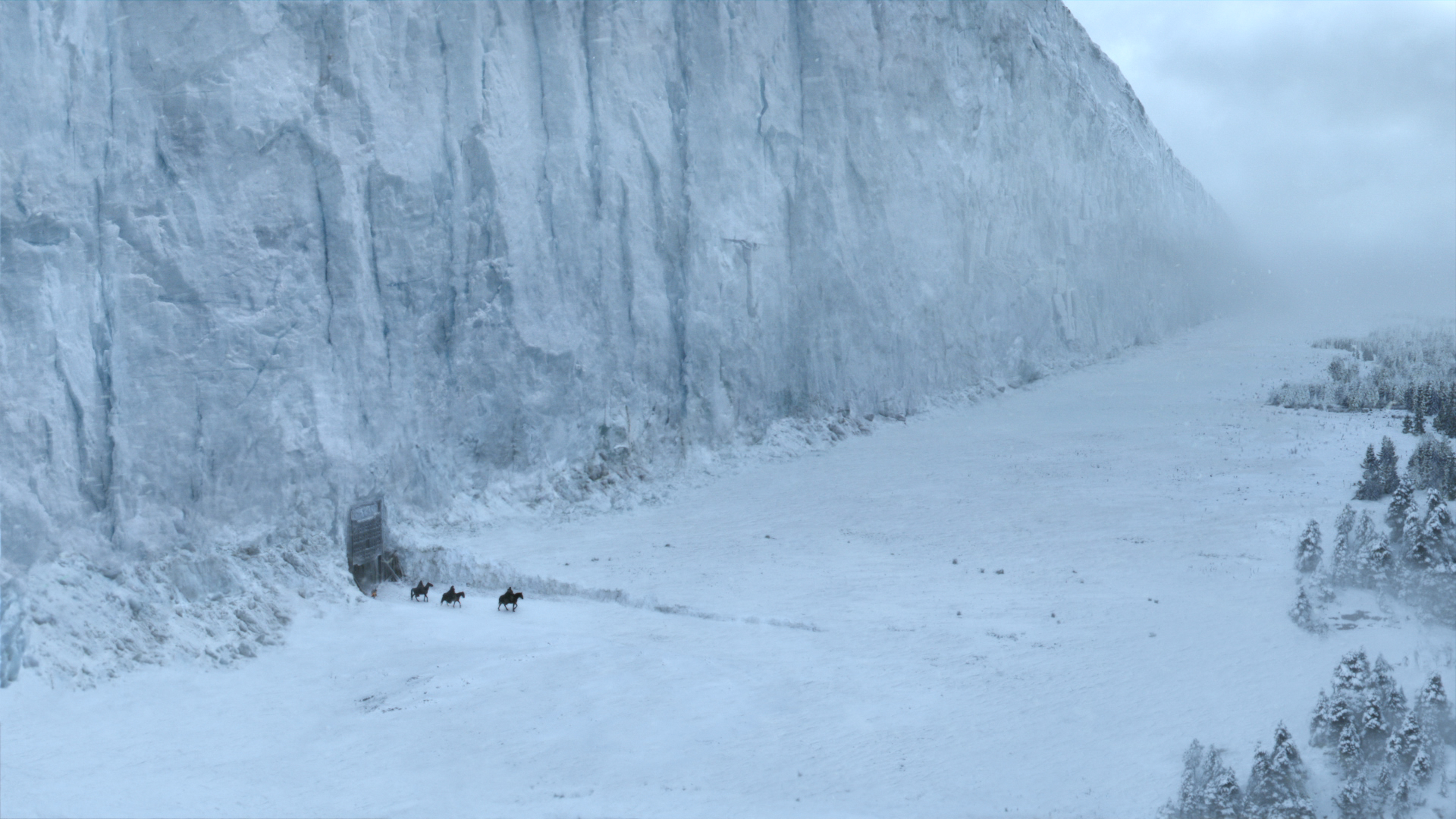
When I visited Hadrian's Wall in the Spring of 2007, I saw a UNESCO World Heritage Site that hinted at civilizations, feuds, and bodies long disintegrated, as had the once foreboding wall. As exciting as it was to explore the history of Hadrian's Wall, I saw this:


My own picture. My caption at the time: 
"the actual wall of roman awesomeness that doesn't go much 
of anywhere anymore but is still completely frikkin' cool."


Enough of that . . . Here's what G.R.R. Martin saw: 


. . . a 700-plus foot wall made of ice, meant to discourage unwanted tourists, such as undead White Walkers with frosty blue eyes, and the "children"--a people of long forgotten magic--who watch through the blood-red eyes of the white weirwood trees.

And this must be how G.R.R. Martin imagines his toilet.


Martin's ability to dream on a grandiose scale is what makes some compare him to Tolkien; his ability to cruelly obliterate hope is what makes the reader realize that this is not another Tolkien novel.  The environment may be a fantasy, but the characters are all too realistic, leading Anne McCaffrey to describe Game of Thrones as a "fantasticorical" (and other readers to try and force the two words together in less fantasticorical ways). 


Among the 2,529 customer reviews on Amazon.com (not counting the 4,000+ "likes" for some of the reviews) and the 4,908 reviews on Barnes and Noble, one can find the enraged, embittered, offended, disgusted leavings of readers who were looking for Frodo and Richard Rahl, only to find the gross, disappointing, conniving, broken, and utterly human characters true fans have come to love. 

"Love" is a light word in this case. For what Twihards have in volume and soprano range, Game of Thrones fans have in sheer devotion, following Martin's five-book series over fifteen years. Thank goodness Stephanie Meyers didn't force her adolescent following to wait six years for Breaking Dawn, which is the length of time Martin spent writing book five, Dance with Dragons.


The release of Dance with Dragons coincided with the start of the HBO TV series, the re-release of the board game, the creation of the role playing video game, and the emergence of fans old and new on a Martin-esque scale (as evidenced in part by the 274 patrons still in line to read the first book on AACPL's e-book waiting list). Moreover, 2011 experienced the thorough integration of Game of Thrones into modern culture's most precious commodity, social media: the ability to make, remake, comment, like, and share. If you haven't seen the Game of Thrones characters as presidential candidates on Facebook yet, here is your link out of the stone age: Click here to rejoin society. 

If you are one of those 274 people on the waitlist for GoT (or another rare being who has avoided the book as of yet), here are a few spoiler-free details to summarize what you're up for:

1. You should know that there's lots of sex, nudity, violence, drinking, swearing, and other things gory, vulgar, and grim. 
2. Your moral compass will flip out, as will your expectations. As Lev Grossman says in his review, "The only way to tell the heroes from the villains is that the hero is the guy with the knife in his back." 
3. You will have to work hard for a book that is not nice, fun, or uplifting. If you aren't in the mood for ploughing through a dense thicket of words that leave you disheartened and frustrated and dismally awaiting the sixth book, there is plenty of enjoyable book candy out there. Go pick up a Xanth novel. Or a Harry Potter.

By the way, I did not read every single one of those 7,437 reviews mentioned above. I will leave that for you, voracious reader, if you are one of the deprived souls suffering from both the end of HBO's Game of Thrones season and the seemingly endless wait for the sixth book, The Winds of Winter. If you fit this description, you are likely reading this review solely in a vain attempt to quell your vampiric thirst for more Martin. I likely know who you are.


In the meantime, the rest of us bookworms will just have to suffer through more of this.

If you liked Game of Thrones, I recommend:

  • Shakespeare's Macbeth
  • Lost or The Sopranos (TV)
  • Historical documentaries, biographies, and autobiographies (like the U.S., France, and Great Britain between 1900 and 1939. Or Ghengis Khan.)
  • The game Risk


Enjoyable trivia:

On Tuesday, July 10, 2012, an exact word search in the New York Times Book Review for "Game of Thrones" returns Nuns Behaving Badly, apparently listed under Children's Books, about nuns who train as assassins. Review by Jessica Bruder, published April 6, 2012. Gotta love web searches.

Sources:


Grossman, Lev. G.R.R. Martin's Complex Epic for an Ambivalent Age
NPR Staff. Author George R.R. Martin 'Playing For Keeps'  
Jennings, Dana. In a Fantasyland of Liars, Trust No One, and Keep Your Dragon Close.
Amazon: Game of Thrones (book)
B&N: Game of Thrones (book)

Saturday, June 9, 2012

THE SHADOW OF THE WIND, by Carlos Ruiz Zafon


The Shadow of the Wind, by Carlos Ruis Zafon . . . Anything I say about this novel can not approach the experience you will have reading it. And you should read it. My advice to you: take notes. The plot is thick, tangled, and fascinating, connecting even small, unexpected characters the way life does every day. I found myself turning the pages backwards as often as forward.

Carlos Ruiz Zafon is a genius. He is able to see through the eyes of a young man who speaks with the voice of a poet and receives wisdom from the most unlikely corners of life. I read the translation by Lucia Graves, and the words are elegant, poignant, sometimes startlingly vulgar; clearly, the writer loved every one of them, selecting only the choicest morsels for his readers to devour. Check out his website, and read his explanation for why he writes. Carlos Ruiz Zafon is an artist, and his work-even the gnarly bitter parts--is beautiful.

The novel walks through Barcelona and its layers of history, describing a tangible place affected by true events, occupied by people whose lives--though fictional--are woven into the life of the city itself.  There is a sense of reality in the way changing times impact the characters, in small details like the introduction of television to larger events like the weight of the World War.

But underlying this veracity is a world of shadows, filled with drama, anguish, torment, blood, death, revenge, and all the best elements of a nineteenth-century gothic novel brought into the twentieth-century. It's as though the author is reminding us that even when we think world grows ordinary, familiar, and mundane with the passing of time--even as wires and hard science tell us how the world works--no matter what era we live in, the mystery never truly subsides. There is something in us that yearns for the intensity of greatness: profound love, grotesque horror, devastating loss. Guided by the perspective of a curious young man, readers interact with the city and its people knowing that the presence of otherworldly events and characters is constant, that myth and dreams shape the world as much as bullets and cinema.

And perhaps that is where the book steps in, because a crucial theme of the novel is a love of the actual, physical book: its ability to hide in the depths of the Cemetary of Books, on your own shelf, or somewhere in your past; the contrast of the material printed page and the ethereal word, added to the suspense of the unexpected only discovered if you turn the page. We may be able to translate the content of an authors work into multiple media, but there is something special about the book that transports us and adds to our reading. There is a sense of sadness in the novel as the presence of a modern author's consciousness converses with the narrator of the past, watching the world of books begin to slip away.

I loved this book, and I highly recommend it!

If you liked The Shadow of the Wind, you may also like:

George Eliot, Daniel Deronda
Alexandre Dumas, The Count of Monte Cristo
Edgar Allen Poe, The Tell-Tale Heart
Caleb Carr, The Alienist
Doyle, The Hound of the Baskervilles

Saturday, November 26, 2011

THE LEVIATHAN series by Scott Westerfeld


THE LEVIATHAN is an alternative history trilogy written by Scott Westerfeld and powerfully illustrated by Keith Thompson.   Leviathan, the first book in the series, launches the reader into WWI with the assassination of the Archduke of Austria--with a few significant differences.

For one thing, the world is split in two, not just by alliances but also by technology.  There are the Darwinists, countries who support evolutionary science that blends the genetic traits of different lifeforms to create new species--even species that are entire ecosystems unto themselves, like the airship Leviathan.  The airship is based on the body of a whale, but floats in the air with the hydrogen waste of the creatures living aboard, such as bats and bees.  The "whale" steers through the air using cilia along its sides.  The bats also serve as weapons; they eat flechettes, and are prompted in proper Pavlovian style to discharge the weaponry on enemies below.  Like any proper airship, the living Leviathan supports a human crew--from captains to middies.

Then, there are the Clankers--countries who resist Darwinist technology and instead develop giant mechas, powerful steam-driven robots capable of bringing down even an airbeast the size of the Leviathan.

As the assassination of Austria's Archduke rocks the world's nations and heightens the cultural divide between Clanker and Darwinist powers, there are two individuals whose actions--small as they may be--have the power to influence the course of the war.

One is Aleksander, the heir to the Austro-Hungarian throne.  Forced to flee from his own country after his parents are assassinated, Aleksander faces a life hidden from his own people, hoping that soon, he can fulfill his destiny to end the war and claim his rightful lega--that is, until the Leviathan crashes into his life with Dylan Sharp aboard.

Dylan Sharp is actually Deryn--a girl forced to act as a boy in order to achieve her dreams of flying with the British military.  Deryn's wits quickly win her a place aboard the Leviathan. But when the airship crashes into Aleksander's life, she finds an unexpected ally and friend--who, nevertheless, can never know her greatest secret.

Scott Westerfeld creates a masterpiece with this trilogy.  His books contain exciting innovations, intriguing characters, and insightful interpretations of history (and how history might have been impacted IF . . . ).  Plus, the illustrations in these books are incredible.  Keith Thompson really captures the essence of the era and Westerfeld's imagination.  In my estimation, this is a series worth buying, or at least reading in print rather than on an e-reader, if only to enjoy the amazing illustrations at their best quality.

Between boffins and counts, Stormwalkers and "perspicacious" lorises, Westerfeld and Thompson create a truly exceptional world with a powerful story.  I believe that Westerfeld accomplishes two major things with this work: he inspires every person to create their own destiny, and he convinces me that there still is potential for truly innovative authors.  Now, we just need more adult books as good as Leviathan.

On a side note, I am also convinced that Westerfeld plays a mad game of Risk.

You can read more about Westerfeld and his Leviathan series at his website: http://scottwesterfeld.com/books/leviathan/.

If you liked the Leviathan series, I recommend reading:

The Book of Atrus (Myst, Book 1) by Rand Miller
Found (The Missing) by Margaret Peterson Haddix
Alanna (The Lioness Quartet) by Tamora Pierce

Or watching

Avatar, the Last Airbender


Friday, November 11, 2011

A MONSTROUS REGIMENT OF WOMEN, by Laurie R. King


A Monstrous Regiment of Women, written by Laurie R. King, continues the story of Mary Russell, a Oxford graduate just coming into her inheritance.  Russell lives in two worlds throughout the book: she is first a researcher publishing her thesis, enjoying recent academic attention while poring through theological tomes in the Bodleian Library; when this world fails to stimulate her, she takes the train out of Oxford and navigates the streets of London, providing the reader with observations about post-World War II British society.

As a portrait of life after the war, a time when theological, social, and scientific revolutions were taking place, I believe the book.  As a discussion of feminist theology, King succeeds in starting an excellent discussion.  As a mystery novel, the novel falls flat.  Mary Russell is not a detective; she is a woman of action, a brave and intelligent woman capable of discerning character traits in others.  The book is not about her ability to tease clues from suspicious scenarios; the author actually delves very little into the mystery itself.

Instead, the crux of the novel is Mary Russell's romance with her mentor, Sherlock Holmes of 221b Baker Street.  Call me a conservative, but at this point, I stop believing the novel. The idea of a romance driving a Holmes novel is sacrilegious, while the idea of a romance driving Russell's novel instead of the mystery undermines her own abilities, accomplishments, and potential.  She only exists to romance the man.  How is that a feminist novel? Holmes is believable as a mentor, even to a woman; I cannot accept his identity as a lover.

As far as I'm concerned, his very immortality makes him untouchable.

Perhaps no character in the mystery/thriller genre remains as popular as the innovative and eccentric Sherlock Holmes.  No character since has achieved such legendary status as the Baker Street detective, with his passion for modern forensic methods and a power of observation that verged on supernatural--yet, as Holmes reminds us, is merely "elementary" deduction.  Sherlock Holmes amassed so much popularity that his own creator, Sir Arthur Conan Doyle, lost complete control: an attempt to kill off the character resulted in such an outcry that Holmes came back to life, as immortal in fiction as he has been in our culture.

Of course, as a celebrity, the character of Sherlock Holmes has been the subject of numerous movies and subsequent books. Take Basil Rathbone's portrayal in the 1940s, Jeremy Brett's rendition during the 80's and 90's, and Benedict Cumberbatch's in the current TV series "Sherlock."  Rathbone often plays a detective in the midst of World War II, quoting Churchill, promoting democracy, and taking down Nazis.  Jeremy Brett takes Sherlock back to his turn-of-the-century period, and successfully portrays the eccentric, ingenious roommate who one moment succumbs to a depressed cocaine-infused funk and the next moment, inspired by intellectual stimulation, leaps energetically (and arrogantly) into the fray with unwavering focus.  Cumberbatch plays "A New Sleuth for the 21st Century," using wireless connections to solve cases; Dr. Watson publishes his stories on a blog.  Mark Gatiss, the co-creator of "Sherlock," notes in his own blog that Rathbone and the modernization of Holmes's setting influenced the TV show, and that "police may be able to put clues together, but only Sherlock has the vast brain power and imagination that can make the huge leaps of deduction."

Interestingly, we have never had a Holmes from Holmes's point of view; we are always on the outside, with Watson, admiring a brilliant bohemian intellectual unfettered by societal myopia.

I'll admit, I have no idea how to comment on the Hollywood movies and Robert Downey Jr.'s representation of the famous detective.  I like the movie; I enjoy it; but I also separate this version of Holmes from the literary legend, as though they were two separate entities instead of the same character.  And perhaps I should allow for this in A Monstrous Regiment of Women.  For Holmes to be a figure of romance, he would have to grow and change; this is not within the ability of an immortal, of a legend.  So maybe, King's novel portrays Holmes as even more human than Doyle himself could manage.   This isn't a crime against nature.  However, if you are looking for a feminist and Holmesian novel, I would rather recommend you to Stieg Larsson's novels.

For more information about Laurie R. King's book (and image), visit A Monstrous Regiment of Women.


Thursday, October 13, 2011

The Sources of Library Anxiety

Theory of Information Behavior Number 39: Library Anxiety
(eds. Fisher, Karen.  Sanda Erdelez. Lynne McKechnie.  Theories of Information Behavior.)

Now you have a name for those feelings of dread whenever you have to ask a librarian for help.  Or maybe it starts before then--maybe the hairs on your neck rise as soon as you step through the intimidating machines that scan for books you might steal.  Perhaps your knees tremble when you meet the glaring beady eyes of the librarian, who makes you think about that Charlie Brown comic book you forgot to return when you were eight years old. Whenever the feeling arises, there is an actual term for it: library anxiety.

A professor named Constance Mellon found that when asked about their library experience, students talked less about finding information and more about the fear they felt inside the library.  But where did this fear originate?  Why does the public hesitate to approach a librarian?  Why isn't the library space a welcoming place?

I would like to present a few images of libraries and librarians in popular culture that may help us understand the origins of library anxiety.


River City Library

The Music Man's Marian is perhaps the epitome of the librarian stereotype: the tightly-wound, hair-in-a-bun, shushing female librarian (complete with glasses)!  Professor Harold Hill says it all: "the civilized world accepts as unforgivable sin any talking out loud with any librarian!"  But clearly all a librarian needs is a good-looking con man to loosen up and dance on their antique furniture.  Don't you love how everyone enters the library in a march?  And how the men have to remove their identical glasses to dance?


The New York Public Library

Poor Alice!  Imagine being attacked by incorporeal beings while wandering the labyrinth of musty-smelling shelves!  If this is what lives in the library, it's understandable that people hesitate to spend any great length of time here.  That chill you feel in the air? Not the air conditioning, dude--it's probably a hint that some ectoplasmic residual is coming your way.  At least you know who to call . . .


Your local library?

Hopefully not.  But just in case, you'd better brush up on your Dewey.  Or just avoid the library altogether.


Sunnydale High School Library

Don't think school libraries are any exception to the rule.  This particular library is built over the entrance to the Hellmouth.  Pros? The cage of weaponry, the largest occult collection in print, and a resident Vampire Slayer.  But is it worth the risk? Don't forget to factor in the distance, the time spent researching, and the likelihood of an apocalypse . . .

Conclusion

Obviously, these are extreme cases of people and events that cause library anxiety.  But there are some valuable lessons for librarians:

1. If you sing and dance, the library becomes a happier place.
2. Library ghosts are crankier than librarians.  Just let them play with the card catalog and they will calm down.
3. Refrain from wearing your barbarian suit to work.  Oh, and leave the cleaver at home.  I know RUSA doesn't state this in their ethics, but I guarantee this will increase your approachability.
4. Don't establish your rare books collection on a Hellmouth.  Oh, and don't scan demons into your database.  They really mess with your network.

Friday, September 23, 2011

THE GREEN LION TRILOGY by Teresa Edgerton

There are only two things to do when it's this dark and damp outside:

a. run outside like a five-year-old, get soaked, and go inside for sweatpants and hot tea

b. curl up on the couch with aforementioned cuppa, a large white cat, and a novel of the guilty-pleasure variety


Since rain has a habit of sticking around for a good week or so in Maryland, you might as well make that guilty-pleasure novel a series.  I recommend the Green Lion Trilogy written by Teresa Edgerton.  Do not be deceived by the tacky cover art, and you might experience an enjoyable read.

The Green Lion Trilogy starts with Child of Saturn.  Apprentice-mage Teleri is little more than a shadow in the palace of Cynwas, King of Celydonn.  With the disappearance of the state wizard, and the rise of evil magic in the land, Teleri will have to embrace a hidden side of herself.  Of course, she accomplishes this with the help of a studmuffin knight experiencing his own brand of inner-turmoil because--wait for it--he turns into a wolf every now and then.

Hey, don't leave yet!  This isn't a werewolf novel in the genre of Series-That-Shall-Not-Be-Named.  I can't say this is particularly great literature.  Nor can I say it's completely original, or that there is a cast full of dynamic characters (there's mostly a pretty clear "good-bad" delineation, with a few gray areas here and there).  But the characters are lovable, the land they inhabit is intriguing, and somehow you find yourself sucked into the soap-opera-in-tunics storyline.  The jewel of this trilogy--literally, as you'll see--is Teleri.  Her development, her mystery, and yes, even her relationship with the studmuffin!  It's clear that the author loves this character, and the reader loves her too.  But there is a story-line just as beautiful as the main Teleri-Ceilyn-Diaspad epic lying in wait underneath, and clearly, Edgerton saw it too, because she developed it into the marshes, the hills of the "fairy-folk," and a new series.  Celydonn itself is a character in Edgerton's books, and I think this and the influence of Celtic/Welsh mythologies give the series its edge.

The trick to Teresa Edgerton is that her books are hard to find.  She's not going to be in any major bookstore (although those are getting hard to find too . . . ).  I have no idea how I found Child of Saturn, only that it was clearly well loved before I ever saw it.  I found some used copies online and they will take up my shelf space--and my rainy-day reading--for some time to come.

Visit http://teresaedgerton.com/index.html to learn more.

Sunday, August 21, 2011

My favorite children's book. EVER.

My mother and I are going to my cousin's baby shower in a few weeks.  She asked us all to bring our favorite children's book to the shower. I'll probably have to find something a bit more age-appropriate (most babies don't start reading at a 3-5th grade level) but my favorite children's book of all time is A Barrel of Laughs, a Vale of Tears by Jules Feiffer.

Roger is a prince who has been surrounded by joy his entire life.  He's never heard an argument, never seen someone cry.  As a result, wherever Roger goes, he makes people laugh riotously and uncontrollably.  He is a "carrier of joy."  But J. Wellington Wizard knows that Roger can't be a good king if he doesn't experience the "mixed-up universe full of sun and shadow, highlights and lowlifes."  So Roger is sent on a quest, without knowing his object or destination--only knowing that "wherever it is, whatever it is, whoever it is, you will know you have found it when neither of you is laughing."

What follows is perhaps a beautiful, simple metaphor for life, with all its laughs and tears.  It isn't epic--but it is.  Anyone who's seen the musical "Pippin" knows the kind of feeling you're left with: as though you've found something less than your dreams and potential, but more right for you.

Most people know Jules Feiffer as the illustrator of the classic The Phantom Tollbooth.  Feiffer also utilizes his signature pen-and-ink cartoons in A Barrel of Laughs, seamlessly integrating picture with text.  Feiffer's diction is playful, witty, and sometimes downright snarky.  The most enjoyable aspect of Feiffer's writing style is his play between reader, writer, character, and plot.  The author--as much a character in the book as any of his inventions--does not have complete control over the story; characters are able to walk in and out of the book, and rebel against the author's wishes.  Feiffer keeps the reader trekking--trek-trek-trek--through the novel right along with the main character, Roger, on his vague quest for "Exxxperrrienccce!"

Here's an excerpt:

     On this day, because [J. Wellington Wizard] was exhausted, having been up all night writing predictions for the coming century, he decided to kill two birds with one stone and turn Roger into an armchair.
     "Am I too heavy for you, Roger?"
     "No, sir.  Ha-ha."
     "Did I say something funny?"
     "Not yet, but I'm getting ready. Ha-ha."
     "Let me place a stuffed pillow on your seat and see if that quiets you down.  Do you mind?"
     "No problem, ha-ha."
     J. Wellington looked surprised, then he looked displeased. "Roger, I have been up all night transcribing predictions for the next century.  And not even then will anyone have heard the phrase 'No problem.' 'No problem' will not become a figure of speech for--oh, I predict, another six hundred years.  I hate it in books or movies or TV when people living in times like ours use language that won't be in use for centuries hence."
     "What's movies?  What's TV?"
     "Forget it!" snapped the Wizard, uttering a phrase that wouldn't be used again for six centuries.
     "Sorry about that," said Roger.
     "Be my guest," said the Wizard.
     "That's cool," said Roger.
     "No problem," growled the Wizard, concluding the exchange, which hadn't gone at all as he intended.
     And this was typical of Roger: Nothing went as it was supposed to.

Wednesday, August 17, 2011

THE GRAVEYARD BOOK and THE ABSOLUTELY TRUE DIARY OF A PART-TIME INDIAN

THE GRAVEYARD BOOK


The Graveyard Book is a coming-of-age novel about your average living boy raised by the dead . . .

Neil Gaiman stays true to his twisted, dark fantasy genre in this book recommended for ages 10 and up.  If you are a fan of Coraline or Neverwhere, you'll enjoy Graveyard too.  If that doesn't give you enough context, try this: I bet Tim Burton has the hugest man-crush on Neil Gaiman.

The book starts with a baby, aptly called Nobody Owens (and Bod for short).  He is adopted by a community of graveyard residents: ghosts identified by their headstones (Joji G. Shoji, d. 1921, I was a stranger and you took me in), an ancient entity called the Sleer buried beneath a Celtic burrow, and Bod's unique guardians--the solitary and enigmatic Silas, as well as the strict and erudite graveyard scholar Miss Lupescu.

What makes this book worthy of its Newberry Medal?  Is it that Gaiman challenges children to explore the theme of death?  Is Bod's journey to young adulthood particularly insightful?  Is it the references to history and mythology, the cleverly incorporated supernatural beings (not ONCE did the word vampire crop up, which millions of paranormal readers are thankful for), or the probing into cultural traditions like unconsecrated burials?  Or is the book simply so creative that its readers are completely charmed?

Probably all of the above.

A note about the illustrations: At first I disliked the grotesque proportions, but the brush-and-ink drawings do fit the tone of the novel perfectly.  There is a grotesque whimsy, a Poe-like quality to the writing that is enhanced by Dave McKean's work.


THE ABSOLUTELY TRUE DIARY OF A PART-TIME INDIAN
     I had no idea the Junior was a weird name.  It's a common name on my rez, on any rez.  You walk into any trading post on any rez in the United States and shout, "Hey, Junior!" and seventeen guys will turn around.
     And three women.
     But there were no other people named Junior in Reardan, so I was being laughed at because I was the only one who had that silly name.
     And then I felt smaller because the teacher was taking roll and he called out my name name.
     "Arnold Spirit," the teacher said. . . .
     He moved on to other students, but Penelope leaned over toward me again, but she wasn't laughing at all.  She was mad now.
     "I thought you said your name was Junior," Penelope said.
     She accused me of telling her my real name.  Well, okay, it wasn't completely my real name.  My full name is Arnold Spirit Jr.  But nobody calls me that.  Everybody calls me Junior.  Well, every other Indian calls me Junior.
     "My name is Junior," I said.  "And my name is Arnold.  It's Junior and Arnold.  I'm both."
     I felt like two different people inside of one body.
     No, I felt like a magician slicing myself in half, with Junior living on the north side of the Spokane River and Arnold living on the South.
(Excerpt from True Diary)


I first encountered Sherman Alexie's work in a postmodern literature course, and I found his writer's voice particularly poignant.  He sees things from a unique perspective, a skill he uses to weave his young adult masterpiece, The Absolutely True Diary of a Part-Time Indian.  While so many people are intent on chronicling their memoirs to promote their careers, advocate for their political platforms, or line their wallets, Alexie's memoirs are particularly chosen to illuminate some kind of truth.  There are so many levels to his identity; he has the perspective of a horny teenage boy ("And maybe you're thinking, 'Well, you really shouldn't be talking about masturbation in public.'  Well, tough . . .") and the perspective of someone having to surmount physical challenges ("Susceptible to seizure activity. Doesn't that just roll off the tongue like poetry?").  He sees from the perspective of an Indian growing up on the reservation ("When it comes to death, we know that laughter and tears are pretty much the same thing.") but he also sees from the perspective of someone who is part of two cultures at once (". . . we all look for ways to make the pain go away.  Penelope gorges on her pain and then throws it up and flushes it away.  My dad drinks his pain away.") He doesn't hesitate to plunge into topics like poverty, betrayal, conflict of emotion and self, alcoholism, death, dreams, cultural norms . . . You name it, this book probably has it.

And Alexie's character has a unique way of interpreting his insights: Junior is a cartoonist, and as such, Alexie's novel is filled with amazing cartoons by artist Ellen Forney.  This is how he tries to figure out the unanswerable questions plague human existence (from "Boys can hold hands until they turn nine" to the definition of grief, "When you feel so helpless and stupid that you think nothing will ever be right again, and your macaroni and cheese tastes like sawdust, and you can't even jerk off because it seems like too much trouble. --Webster's Dickshunary 4ever").  Junior's cartoons are necessary to understanding the complex emotions he feels, and every teen can relate to Alexie's understanding that sometimes words just can't capture the things that matter the most.

And since I'm obviously in love with this book, here's another excerpt:

     I draw all the time.
     I draw cartoons of my mother and father; my sister and grandmother; my best friend, Rowdy; and everybody else on the rez.
     I draw because words are too unpredictable.
     I draw because words are too limited.
     If you speak and write in English, or Spanish, or Chinese, or any other language, then only a certain percentage of human beings will get your meaning.
     But when you draw a picture, everybody can understand it.
     If I draw a cartoon of a flower, then every man, woman, and child in the world can look at it and say, "That's a flower."
     So I draw because I want to talk to the world.  And I want the world to pay attention to me.
     I feel important with a pen in my hand.  I feel like I might grow up to be somebody important.  An artist. Maybe a famous artist.  Maybe a rich artist.
     That's the only way I can become rich and famous.
     Just take a look at the world.  Almost all of the rich and famous brown people are artists. They're singers and actors and writers and dancers and directors and poets.
     So I draw because I feel like it might be my only real chance to escape the reservation.
     I think the world is a series of broken dams and floods, and my cartoons are tiny little lifeboats.

Tuesday, July 12, 2011

How to Tell a Story

While this blog isn't about a book, I think it still fits.

After seeing the movie The Last Airbender, I felt the potential for an amazing story and powerful characters, but that potential hadn't been reached.  One of my friends told me that the animated series had a lot more, that she most missed the lighthearted humor and fun of the series, so I finally sat down and watched the thing.

I don't think I've ever seen such a contrast, and it made me think a lot about how we choose to tell stories.  Clearly, the first book of Avatar: the Last Airbender did not succeed as a movie, but why?  Sure, the movie utilized incredible special effects and a media accepted by a larger audience; definitely, there is less prejudice against a movie than an animated series, which are so often dismissed as childish or basic.  Could a different director have captured the essence of the series in a few hours?

This raises questions about the success (or lack of success) of other stories.  Think Lord of the Rings or Harry Potter, Back to the Future, The Odyssey, and Star Wars.  Beowulf, Shakespeare plays, the comic strip Little Orphan Annie.  How do these succeed or fail in different forms, and why?  When someone takes the movie Shrek and makes it into a musical, are we even listening to the story anymore?  What is the value or purpose of each medium?

We've come a long way from sitting around a fire and listening to someone's version of an epic poem memorized and passed by word of mouth for centuries.  What have we gained, or lost?

I think this is critical to think about especially now that physical books are going out of style, replaced by e-books; as letters are replaced by e-mails, e-mails by instant messages, tweets, comments and status bars.  One of the things I enjoy most about research for English papers is reading the letters of authors, finding out their motivations and passions and progress--their own stories--from their own hands.  What will the people generations from now find of us?   What will we sacrifice of art for the sake of entertainment?  What stories will survive, in what ways?

Seeing both the movie and the animated series helped me realized what Avatar: The Last Airbender is really about.  The story just isn't the same without the small vignettes offered by an episode form; the repetition of seemingly minuscule elements, like the cabbage man; the episodes are, in a way, poetry.  By transposing the story from a series to a movie, the humor, the character, and the essence of Avatar are lost.  Like the message in one of the episodes, it's not so much about the destination as it is about the journey.

Friday, July 8, 2011

What is "Young Adult?" (In which the writer attempts to engage in academic inquiry and concludes with opinionated and unresearched ranting)

From what I understand, classifying literature as "young adult" is relatively new.  Along with this comes new research, definitions, experts, and more questions than answers.

For example: Who qualifies as a young adult, and why?  Our standards for adulthood are strange: as Joseph Campbell noted so significantly in Power of Myth, we have no one cultural definition for adulthood except age.  At 16, you can get a permit; at 17, you can see R rated movies by yourself; at 18, you're legally an adult; at 21, you can drink.  But at what age does a human being know sex, poverty, violence, injustice?  At what age does a human understand life?  At what point does a child become an adult, and what is the meaning of the time in between?  As far as I can tell, understanding is a life-long process, most adults I know lack maturity in some way or another, and many children know of more than we adults are willing to admit--some children know more than we adults know.

Is YA lit written for, by, and/or about young adults?  What of all these writers--adult writers--who suddenly decide to flood the YA market with their work, using the formula less grammar + lower age of characters + popular culture references = young adult?

Most importantly, who is allowed to read young adult literature?  Maybe the definition of a young adult lies here: those with the desire to grasp for more than has been assigned or designated to them.  Then the question becomes one of availability: are we allowing children to grow into adults at their pace, or are we stunting their growth by fixing their potential to numbers?

Right now, we have recommended summer book lists separated by grade, but does a spectrum exist that factors in a person's maturity, interests, and reading level to find books that will foster growth?  For example, if an eighth-grade student reads at a second-grade level, they shouldn't have to read books that have the maturity of a second-grader. Likewise, if a fourth-grader has excellent reading skills and devours a Beverly Cleary book in an hour, but isn't interested in the horny thoughts of older kids, do modern books exist for them or are they limited to Victorian classics?  Summer book lists are organized by where a child's reading level SHOULD be.  That's fine for all the fourth graders taking the eighth-grade book lists and feeling cool, but probably not as awesome for the fourth graders who wonder why they're stuck reading picture books filled with chubby, rosy toddlers.

Of course, all of this ties in with further rants about how education systems pass or are forced to pass kids en masse grade after grade without knowing necessary material, how--again--our notion of adulthood is based on age rather than achievement, and how we forget that every student--youth, child, and adult--is an individual.  But what do I know of such things?

Thursday, July 7, 2011

NECTAR IN A SIEVE

To those who live by the land there must always come times of hardship, of fear and of hunger, even as there are years of plenty.  This is one of the truths of our existence as those who live by the land know: that sometimes we eat and sometimes we starve.  We live by our labours from one harvest to the next, there is no certain telling whether we shall be able to feed ourselves and our children, and if bad times are prolonged we know we must see the weak surrender their lives and this fact, too, is within our experience.  In our lives there is no margin for misfortune.

Still, while there was land there was hope. . . . 

Nectar in a Sieve, written by Kamala Markandaya, is reminiscent of The Good Earth and Grapes of Wrath.  There are similar themes: extreme poverty, a connection between the people and the earth, the strength of a woman's patience when faced with unavoidable circumstances.

Rukmani's story begins and ends with the memory of her husband and her surviving children. She herself is not extraordinary, but she survives, living each day as it comes, and enduring hardship because it is just a part of life. She leads no rebellions, does not try to improve her lifestyle except to achieve what is needed to survive, and here is a strange dissonance between Rukmani and the men in her life, who understand some truth that she cannot grasp.  Both Kenny, the white doctor, and Rukmani's sons strive for more of something--whether that is money, health, or some notion of justice or equality.  Rukmani doesn't understand this need for more; she does not contemplate Kenny's politics, but rather his character; and she sees not what could be, but what is, and does the best she can with what she is given.  She accepts that a husband is the center of a woman's life, just as she accepts the choices made by her children, her husband's adultery, and the tenuous security of a farmer's life.  In a life full of upheavals, there are only two significant losses that she cannot seem to overcome: the loss of the land, which is the home built for her by her husband, and the loss of her husband.

It would be interesting to know how Markandaya felt towards her character, as someone who was educated at University and lived her later life abroad as an outsider.  I wonder if she feels like Kenny, who is frustrated by what he calls "ignorance" yet at the same time is drawn with an inexplicable love to a people he cannot make his own.  Was she writing to explore political themes, to share the perspective of people like Rukmani with the Western world, or to explore Rukmani's character?  Probably all of it at once.

Wednesday, July 6, 2011

Amelia Peabody? Meet Amelia Edwards . . .

I read my first Amelia Peabody novel (from Elizabeth Peters's series) in Freshman year of high school, and I've been hooked ever since.  Amelia is a riveting character, and the novels are filled with romance, mystery, and a good dose of history too.  The beauty of the Peabody novels lies in the first-person narration, of which the reader is supposed to be skeptical.  The heroine's confidence, strength, and vitality make Peabody admirable, but her faults and accurately-period prejudices make her human.  Peters creates a truly lovable character in Amelia Peabody, and it's no wonder that the Peabody legacy spans 20 novels and 35 years.  Of course, Peters's experience in the field of Egyptology doesn't hurt either.

However, until I picked up a book about early female archaeologists, I had no idea how much actual history Peters included: that Amelia Peabody was based on an actual woman, Amelia Edwards, who lived a generation before her fictional counterpart.  Like Peabody, Amelia Edwards traveled Egypt by dahabeeya, with a female companion; both are clearly skilled writers, with Edwards succeeding greatly in travel journalism and Peabody with her accounts. Edwards actually co-founded the organization responsible for the success of Sir Flinders Petrie, which must be one of the greatest ironies in the Peabody series (Petrie is set up as Emerson's rival, and Emerson eventually becomes Peabody's husband).  An even greater difference is that the historical Amelia never married; she broke off an engagement with a man, and the author of Ladies of the Field speculates that Edwards's sexuality tended towards women rather than men.  I'm not sure why Peters changed this aspect--if this is even a significant omission, brought about by the constraints of Peters's own time period, or perhaps an element of Edwards's character that hadn't been yet brought to light or acknowledged--but in the end, Amelia Peabody is clearly her own character and not the shade of her historical namesake, and despite a rather conventional romance, the characters are unconventional enough for their time period to make their marriage just as unique.

Learning about Amelia Edwards adds an extra layer to the fictional character of Amelia Peabody, and it's exciting to know that a woman truly did play a significant role in the emergence of Egyptology--so significant, in fact, that Edwards is known as the "Godmother of Egyptology."

I have yet to finish this book--Ladies of the Field: Early Women Archaeologists and their Search for Adventure by Amanda Adams--but the first chapter was so exciting personally, I just had to write a post . . .  I have a feeling that if the other five women are as interesting as Amelia Edwards and the Mexican Archaeologist Zelia Nuttal, this will be one of my favorite books yet--even if it is non-fiction.

A NEW LIGHT ON TIFFANY

One of the television shows I suffer an addiction to is the PBS show History Detectives.  I recently watched an episode about a man whose great grandmother designed stained glass windows for Tiffany.  Gwendolyn Wright, one of the detectives on the show, eventually talks to the author of A New Light on Tiffany: Clara Driscoll and the Tiffany Girls  by Margi Hofer, Martin Eidelberg, and Nina Gray.  Apparently, Tiffany had some progressive ideas about employing women at a time when societal expectations limited a woman's options to teaching or nursing.  The Tiffany Girls were respected artists in their own right; this book definitely sounds like an interesting read!


Currently Reading (if I can get my cat off of my books):

Ladies of the field: early women archaeologists by Amanda Adams
Harry Potter y la Piedra Filosofal by JK Rowling

My To-Read-Next list:

The Absolutely True Diary of a Part-Time Indian by Sherman Alexie
The Graveyard Book by Neil Gaiman
Brendan Buckley's Universe and Everything in it by Sundee T. Frazier
The Information Officer by Mark Mills
Jane Fairfax by Joan Aiken
Mockingbird: a portrait of Harper Lee by Charles Shields

Tuesday, July 5, 2011

WHERE THE MOUNTAIN MEETS THE MOON and GRACELING

Where the Mountain Meets the Moon, by Grace Lin, is an enchanting read.  It's meant for kids 3-5 grade, but the storytelling format and illustrations are equally beautiful for all ages.  It reminds me of Holes in the way that it wraps up all the loose ends and in the skill of the storytelling, but Mountain has a setting in fantasy China and incorporates a lot of beloved mythology.  The author also includes a note in the back explaining her inspiration for the book, and I love when the author shares their process.  No wonder this book was nominated for a Black Eyed Susan Award, and received a Newbery Honor!

Also finished Graceling, by Kristin Cashore.  I liked the book, but it was a typical girl-saves-the-world-and-falls-in-love story. The main content of the book is divided between the politics (kings=bad, people=good) and the step-by-step thinking of Katsa, the main character and a linear thinker, who slowly works out her feelings, her interpretation of right vs. wrong, and her understanding of Po, the handsome lover figure.

The one unconventional feature in this book is that, no, Katsa does not marry Po and ride off into the sunset.  Katsa's independence isn't seen as a psychotic fear of attachment or result of childhood abandonment, like so much popular religious culture will cry.  It's okay for a woman to love a man but not want to marry him, have his babies, and settle; it's okay for a woman to want her freedom.  Because of that, and not because she can kill a mountain lion with her bare hands, Katsa has potential as a strong female role model.